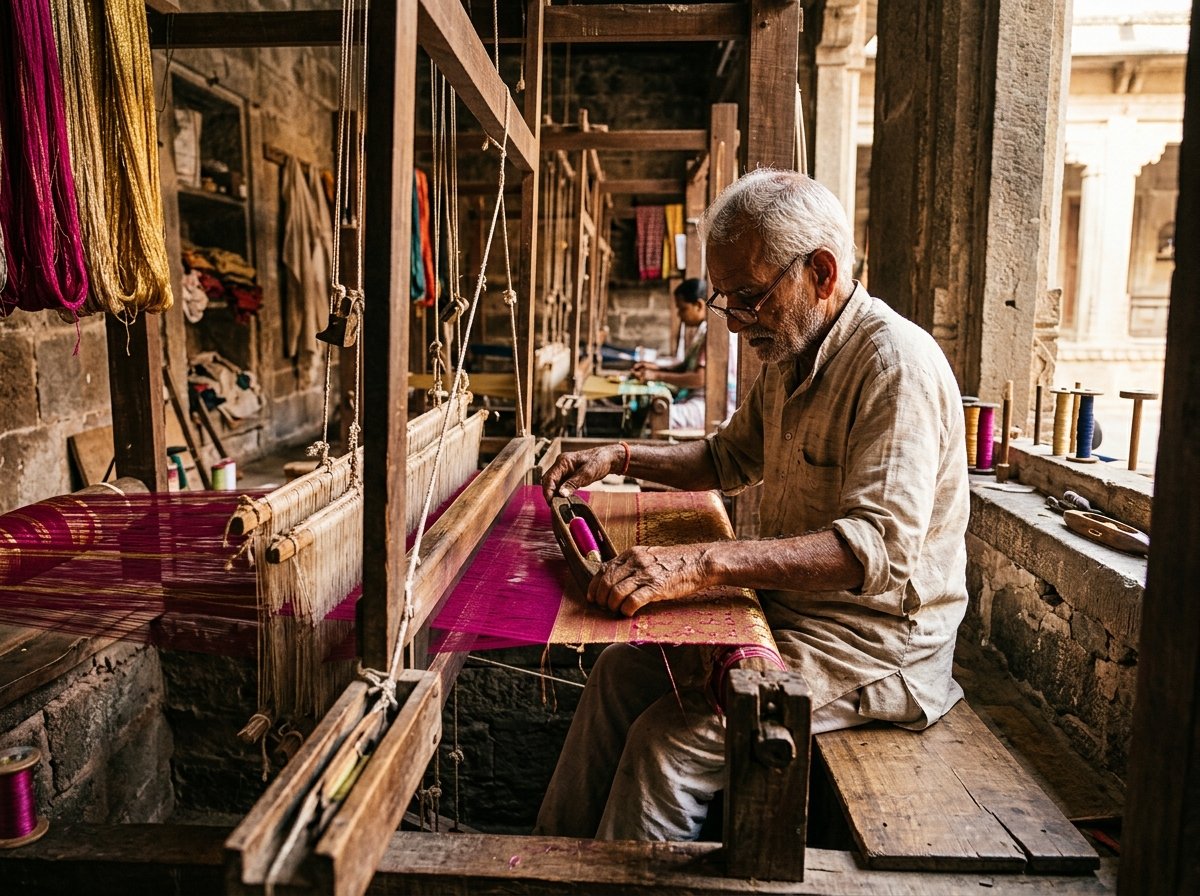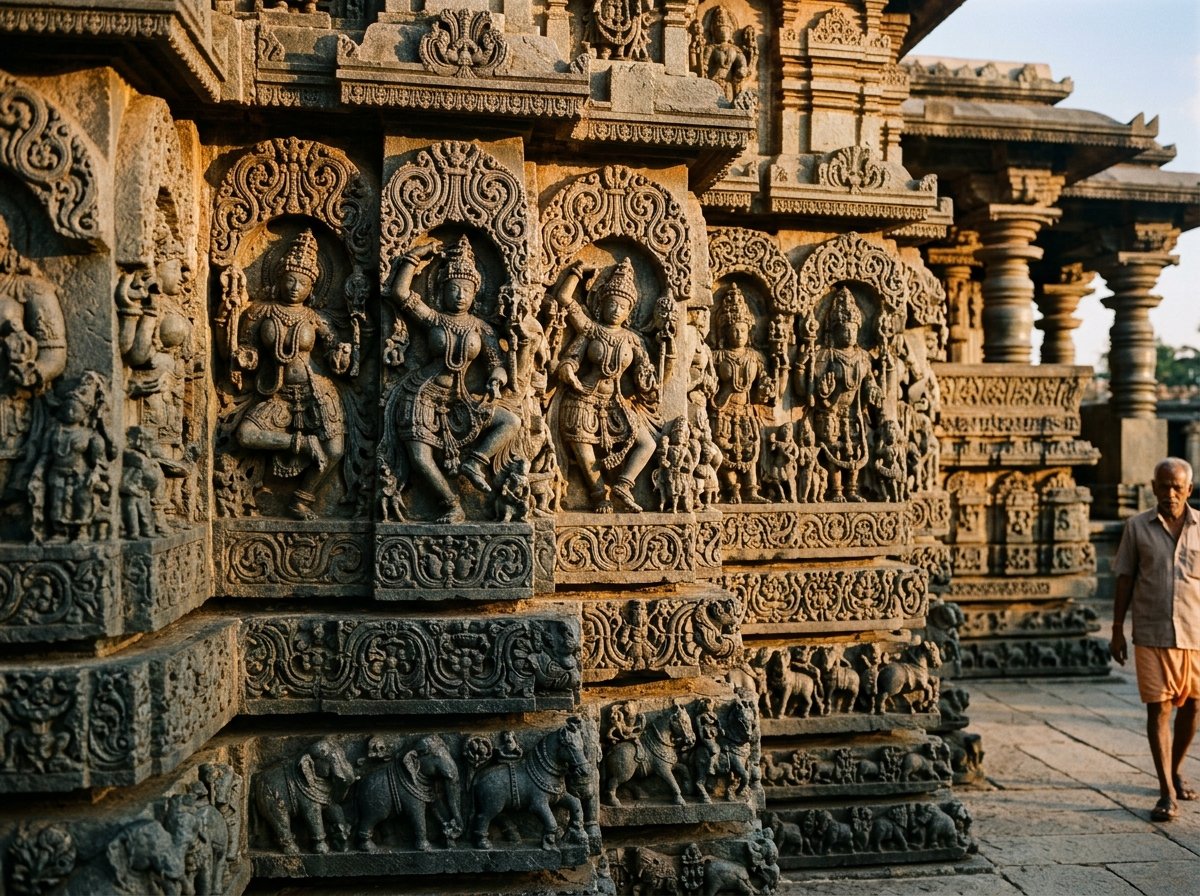
Thirty kilometres south-west of Jaipur, the village of Bagru smells of wet river clay, fermenting jaggery, and hard-wood sawdust. Here, the Chippa community has practised natural mud-resist (dabu) and botanical block printing for well over four hundred years.
Most day tourists arrive in air-conditioned coaches, step directly into roadside showrooms, buy bedspreads, and leave without ever walking through the drying yards. This guide is written for those who want to see the process in sequence—from tree trunk to final sun-bleached river wash.
The sequence of the craft
Block printing is not a single craft; it is a federation of four distinct disciplines working in unison:
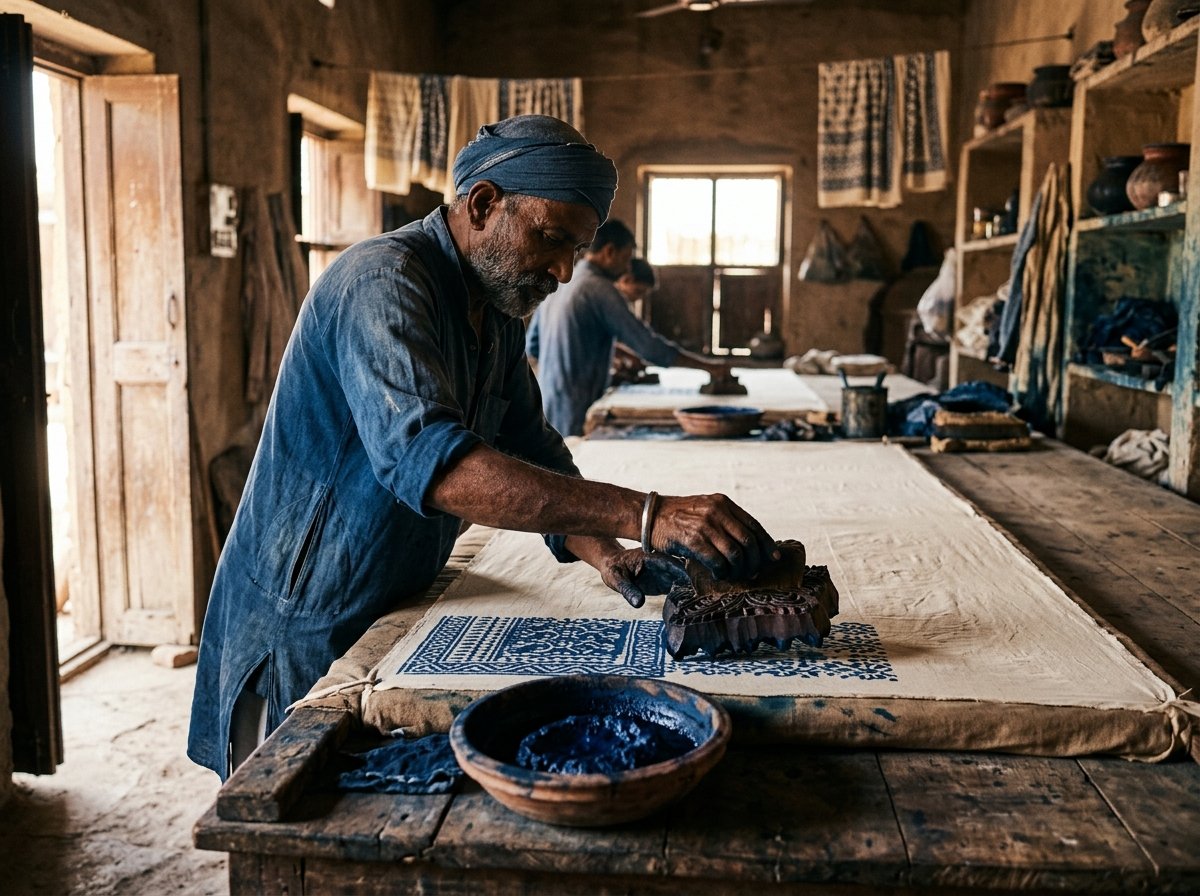
- The Block Carver (Kharodi): In narrow workshop alleys, master carvers sit with miniature chisels and files over seasoned sheesham (Indian rosewood) or teak. Every flower petal, chevron, and grid must be carved in reverse relief. A single multi-colour textile can require up to five interlocking blocks (rekh for the outline, datta for the filler, and gad for the background).
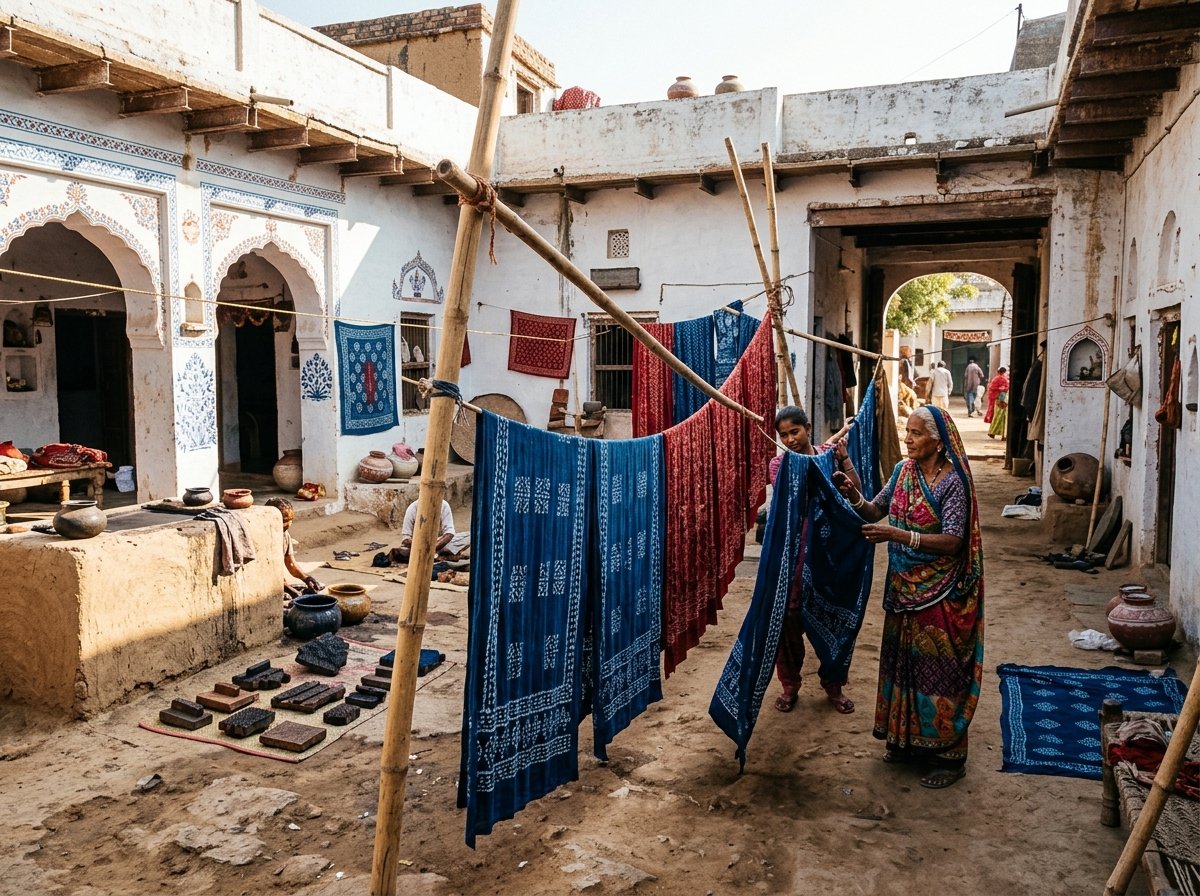
- The Resist Formulation (Dabu): Black clay gathered from the local riverbed is sifted and mixed with lime, gum arabica (gond), and fermented wheat flour to form a thick grey paste. Stamped through the wooden block, this paste protects portions of the fabric from subsequent dye baths.
- The Indigo Vats (Neel Ghars): Ancient earthenware pits sunk three metres into the earth hold living bacterial cultures of natural indigo. When the cloth is immersed, it emerges greenish-yellow; as oxygen touches the wet fabric in the open air, the miraculous transformation to deep oceanic blue takes place in seconds.
- The Sun Washing (Tapai): The vast communal riverbeds and courtyard drying grounds where hundreds of metres of printed cloth dry on bamboo poles under the Rajasthani sun.
Practical field notes
- Best time to visit: Between November and February, when the morning light is soft and temperatures are mild. Printing workshops begin work at 7:30 AM and taper off by early afternoon.
- Etiquette: Always ask before stepping onto the printing mats; artisans work barefoot. Never touch wet dye tables without invitation.
- Finding the real workshops: Walk past the main retail street into the Chippa Mohalla. Look for open courtyards where sawdust flies and dyeing vats steam.