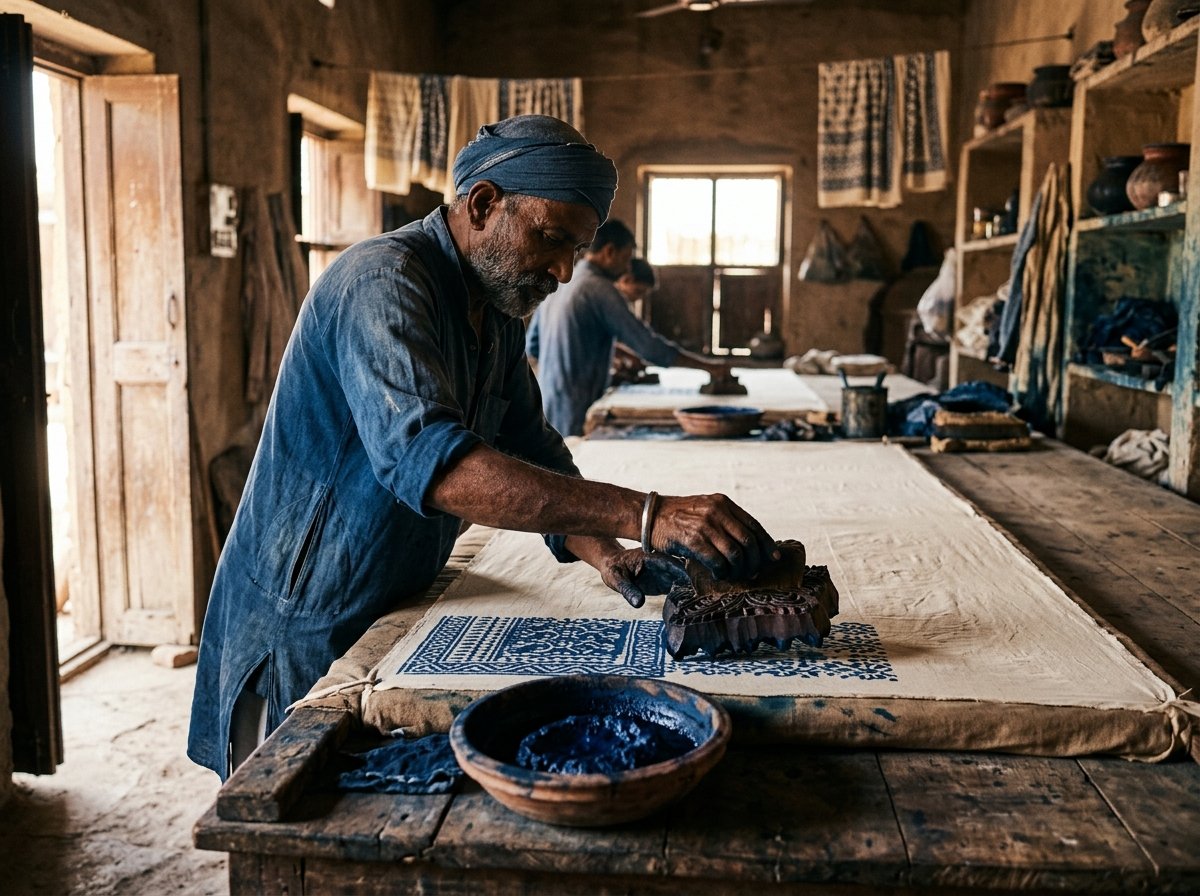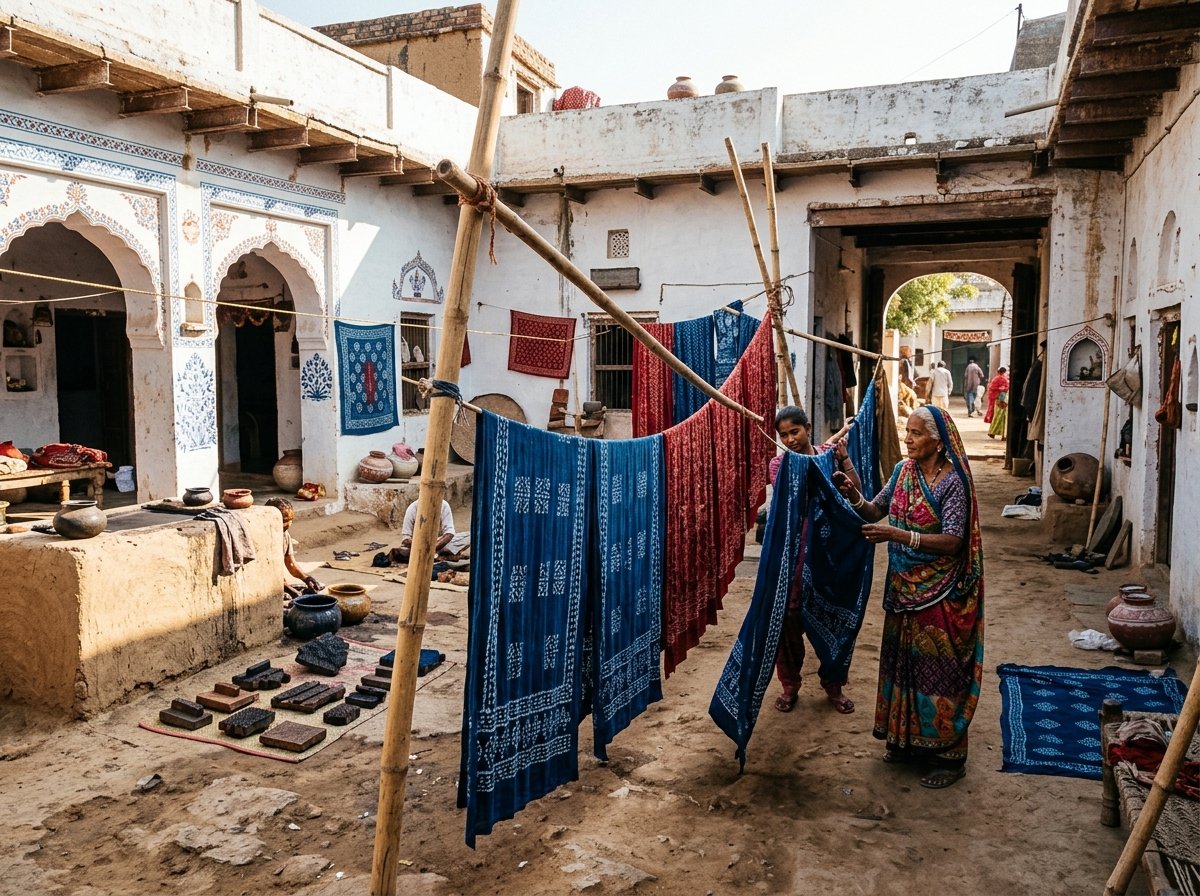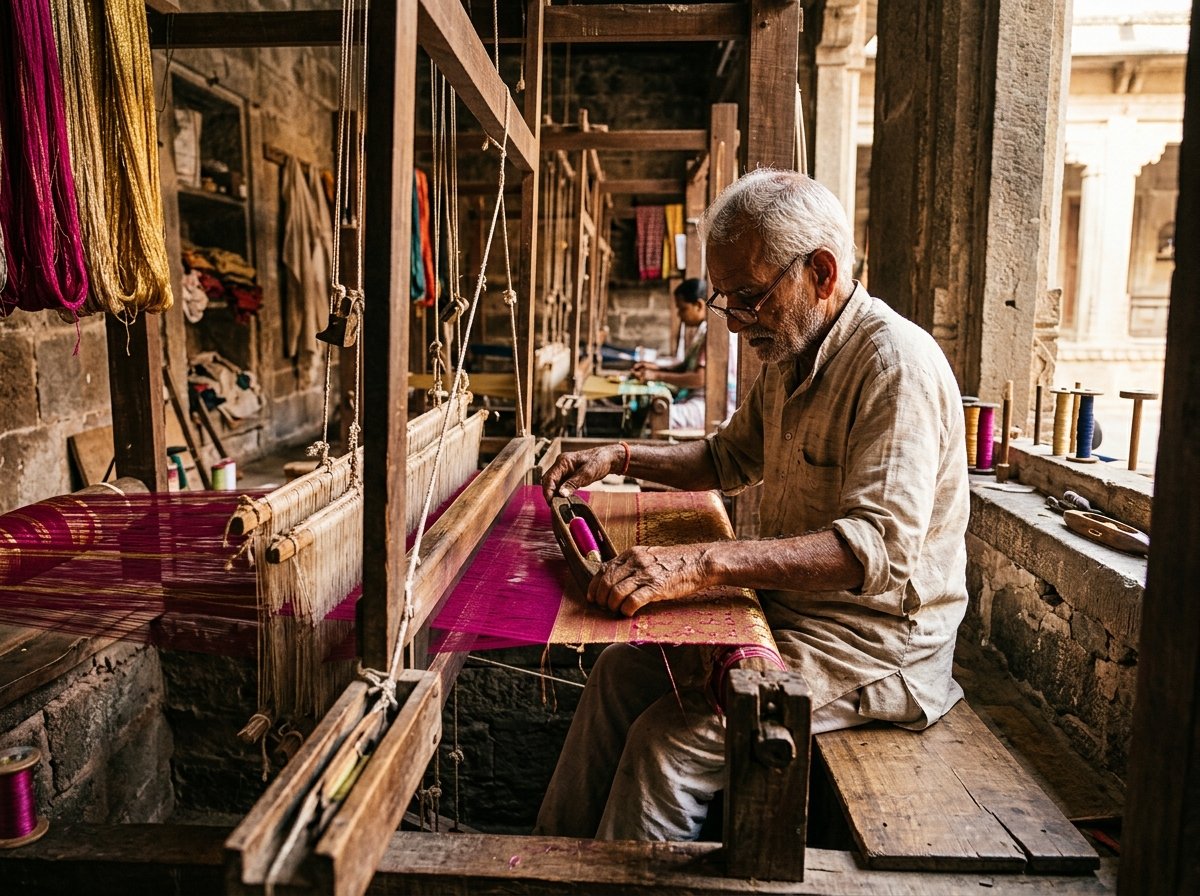
For generations, the saris leaving the riverbank workshops of Maheshwar carried only the name of the master merchant or the metropolitan design house that commissioned them. The artisan who sat in the dug-out pit for eight hours a day, throwing the wooden shuttle between thousands of gossamer silk warps, remained nameless, an invisible hand in a centuries-old supply chain. That compact is beginning to shift. Over the past eighteen months, a growing collective of four hundred weaving households along the Narmada ghats has instituted a provenance tagging system. Attached to every handloom piece is a signed weaver slip: the name of the primary weaver, the time taken to warp and weave, and the village cluster where the silk was spun.
The economics of credit
"A client buying in Mumbai or London spends forty thousand rupees on a tissue border sari, but they rarely know whose fingers held the reed," says Gopal Das, whose family has worked the same wooden frame for five generations. "When our name is on the textile, two things happen. First, the buyer begins to treat the fabric not as a factory commodity, but as a signed artwork. Second, our apprentices see that there is dignity and recognition in staying at the loom." The shift has not come without tension. Traditional middlemen and urban distributors have long guarded producer identities, fearful that transparency would lead patrons directly to weaver doorsteps. Yet progressive boutique labels and ethical craft aggregators are discovering that provenance is not a liability. It is the very value proposition the contemporary market seeks.
From anonymised labour to living authorship
In the workshop courtyards, the rhythm of wooden treadles continues from early dawn until afternoon heat softens into river breezes. The changes are quiet, but profound:
Direct archival registries: Weavers are documenting their proprietary floral and border motifs (narmada leher and ruiphool) to prevent counterfeit mill reproductions.
Fair wage certification: The cooperative sets baseline yardage prices calculated on technical difficulty rather than raw kilogram weight.
Generational retention: Younger artisans who had contemplated migrating to industrial textile hubs are returning to learn master jacquard and pit-loom techniques.
As India's handloom sector faces mounting competition from synthetic powerlooms, the answer emerging from Maheshwar is clear: the craft survives not by lowering prices, but by elevating the person who weaves.