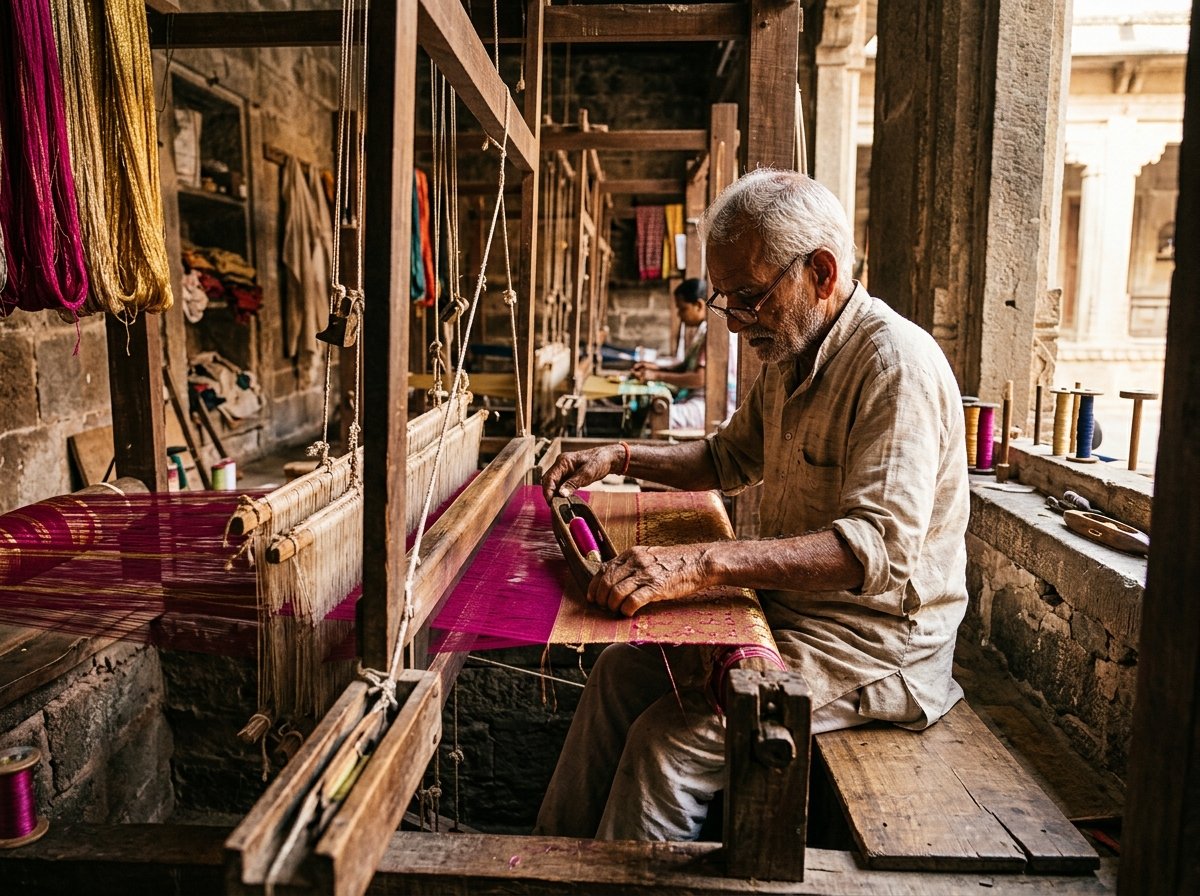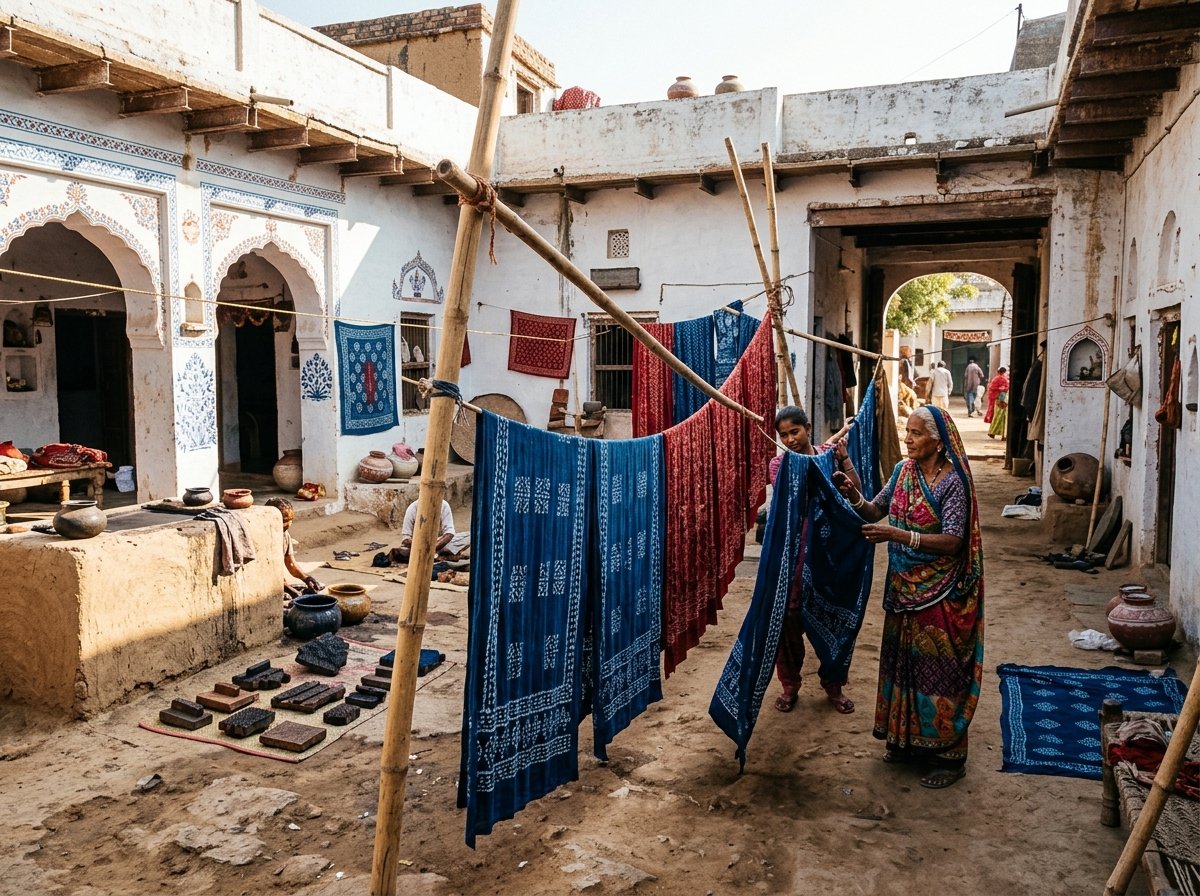
In the open-air communal courtyards of Bagru, the earth itself is part of the printing toolset. Long strips of indigo blue, pomegranate yellow, and alizarin red flutter from tall bamboo scaffolding, casting vibrant moving shadows across whitewashed walls.
While modern industrial textile processing relies on chemical fixatives and steam chambers, the natural printers of Rajasthan rely on an ecological trifecta: mineral-rich local well water, direct sunlight, and unpolluted air.
The battle for groundwater and craft space
As nearby cities expand, industrial runoff and declining groundwater tables present urgent challenges to traditional artisans. The chemical composition of the water is essential: the natural iron and copper in local wells acts as an organic mordant, binding dyes to natural cotton fibers without toxic additives.
"If the water chemistry changes, the shade of our madder (alizarin) changes from rich brick red to dull brown," notes artisan elder Mohanlal. Community-managed water recycling initiatives are now being piloted with local craft foundations, ensuring that wash water is filtered through reed beds and returned safely to the aquifer.
In these courtyards, living heritage is not a static museum piece—it is a working, breathing negotiation between community memory and contemporary ecological survival.