For nearly four decades, the district museum operated as an overgrown attic of antiquities. Chola bronzes gathered dust behind unwashed safety glass; ninth-century Jain tirthankaras were tagged with nothing more than inventory registration codes and brittle handwritten cards reading "God, stone, 10th c."
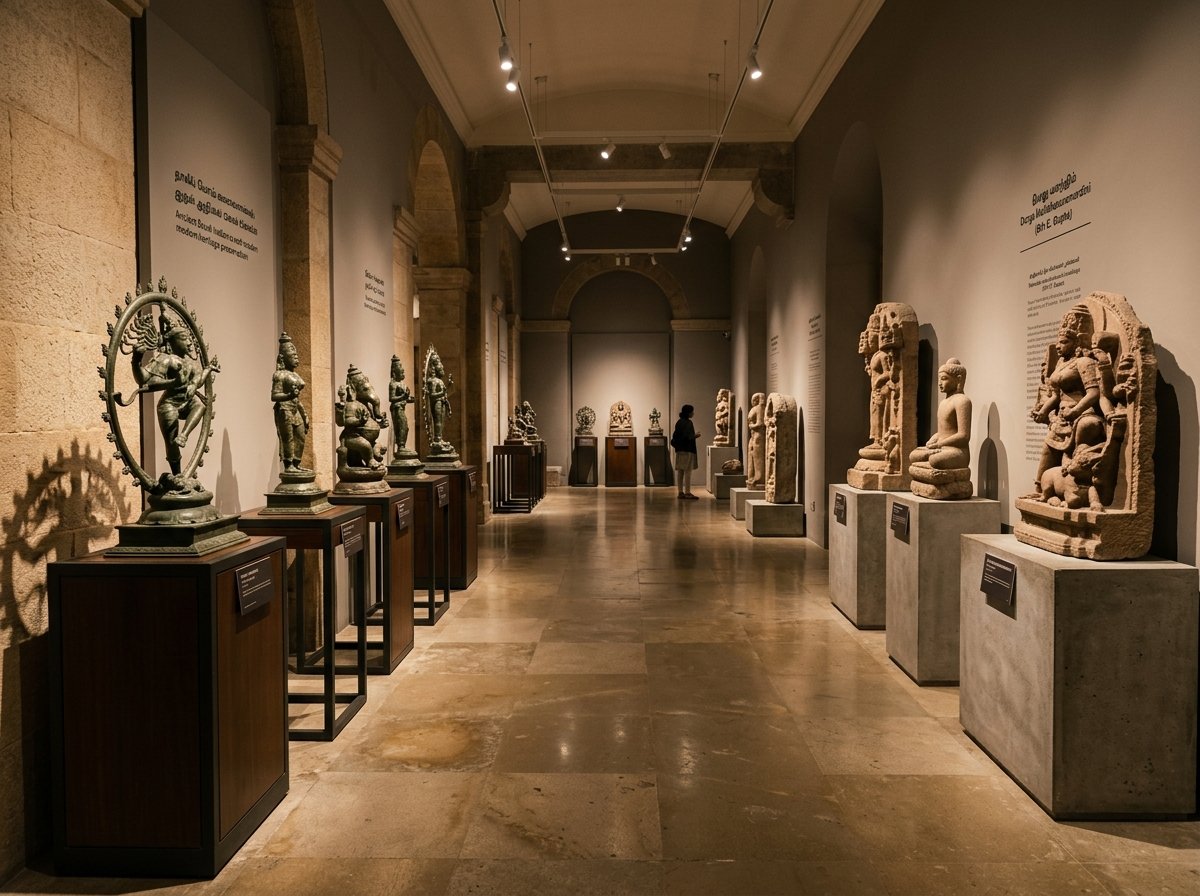
Last week, following a two-year curatorial overhaul led by independent conservators and local historians, the museum reopened its doors. The transformation is striking not because of high-tech gimmicks or digital touchscreens, but because of radical editorial restraint.
Editing down to what matters
The curatorial team de-accessioned nothing, but moved seventy percent of redundant stone fragments into climate-monitored study storage. What remains in the primary galleries has breathing room.
"In the old paradigm, Indian government museums measured prestige by how many hundreds of objects could be crammed into a single case," explains lead curator Dr. Smita Menon. "Visitors experienced museum fatigue within twelve minutes. We asked a simpler question: what does a fourteen-year-old student from this town need to know to feel wonder?"
The results speak across three quiet galleries:
- Natural lighting and matte pedestals: Reflective velvet-lined boxes have been replaced with custom stone plinths that allow 360-degree viewing of sculpture anatomy.
- Bilingual narrative wall labels: Instead of dry provenance jargon, wall texts describe who commissioned the artwork, what local quarry stone was used, and where the ruined temple stood.
- Tactile cast replicas: At the gallery entrance, touchable resin casts of bronze masterworks allow visually impaired visitors and children to feel the sculptural details.
The response from the local town has surprised even the administration. School visits have doubled in the opening week, and evening lectures on regional terracotta archaeology are drawing standing-room audiences. It is a quiet lesson for cultural institutions nationwide: context, not quantity, is what keeps heritage alive.