In the Kaveri river basin town of Swamimalai, the workshop air carries the scent of melted beeswax, dammar resin, and burning charcoal. Here, the sthapathis—hereditary bronze sculptors—practise madhuchishtavidhana, the lost-wax method codified in ancient Sanskrit treatises like the Manasara and Kashyapa Shilpa Shastra.
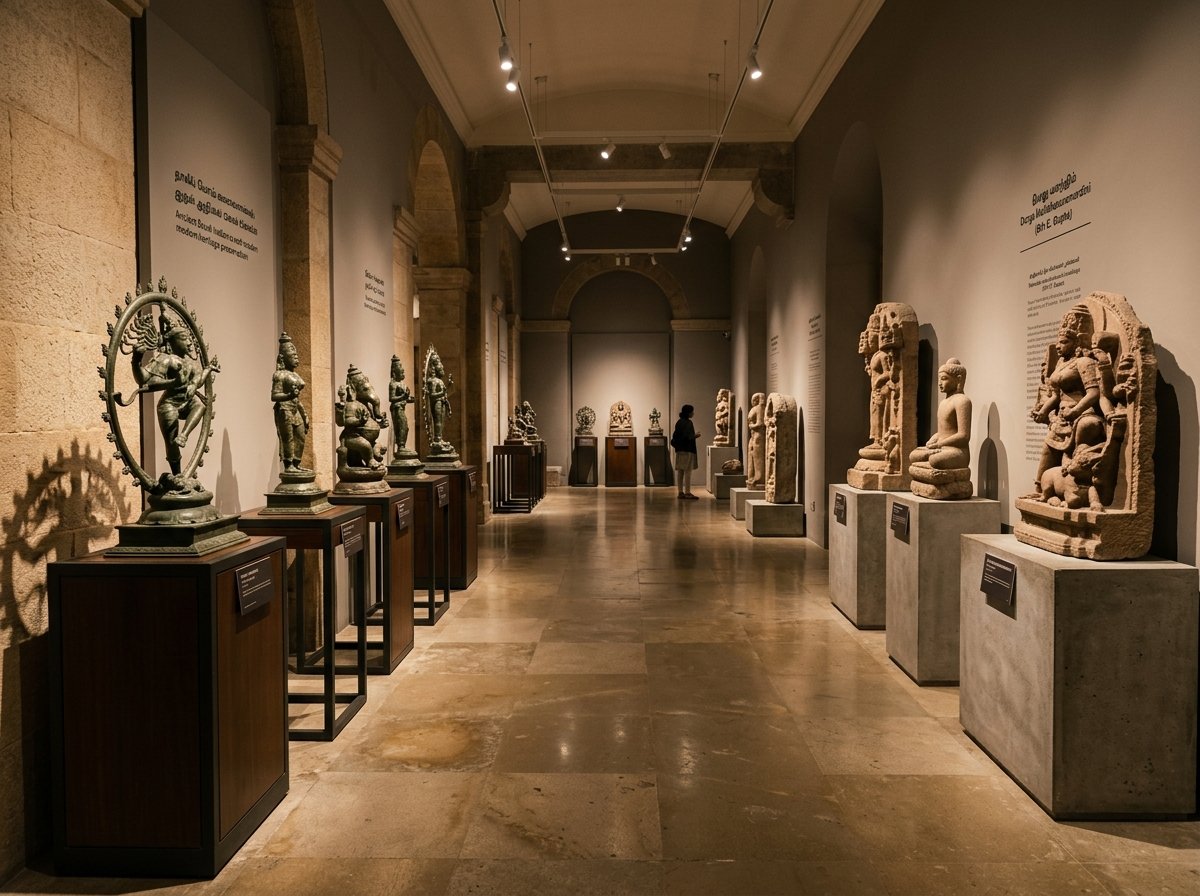
Every famous Chola bronze seen in the world's great museums, from the cosmic dancing Nataraja to the serene Somaskanda, began as a pliable sculpture of pure beeswax.
The science of the wax model
The process admits no shortcuts:
- The wax composition: Beeswax is blended with tree resin (kungilium) and groundnut oil. The resulting wax is warm-carved with heated iron tools, achieving micro-details in hair ornaments, sacred threads, and finger mudras.
- The three-layer clay mould: The wax figure is coated in three distinct layers of clay gathered from the Kaveri riverbed:
- First, the finest alluvial silt (vandal) captures microscopic tool marks.
- Second, a heavier loam clay mixed with charred paddy husk provides insulation.
- Third, a thick structural shell bound with metal wires prevents bursting under molten metal pressure.
- The lost wax and the pour: When baked, the wax melts and flows out through sprue holes. Into the empty glowing terra cotta cavity, molten panchaloha (an alloy of copper, brass, lead, silver, and gold) is poured in a continuous, unbroken stream.
Once the clay shell is cracked open, the bronze is revealed in rough form. What follows is weeks of cold-chisel engraving and tamarind polishing until the bronze achieves the luminous, quiet presence that defines classical Indian sacred sculpture.